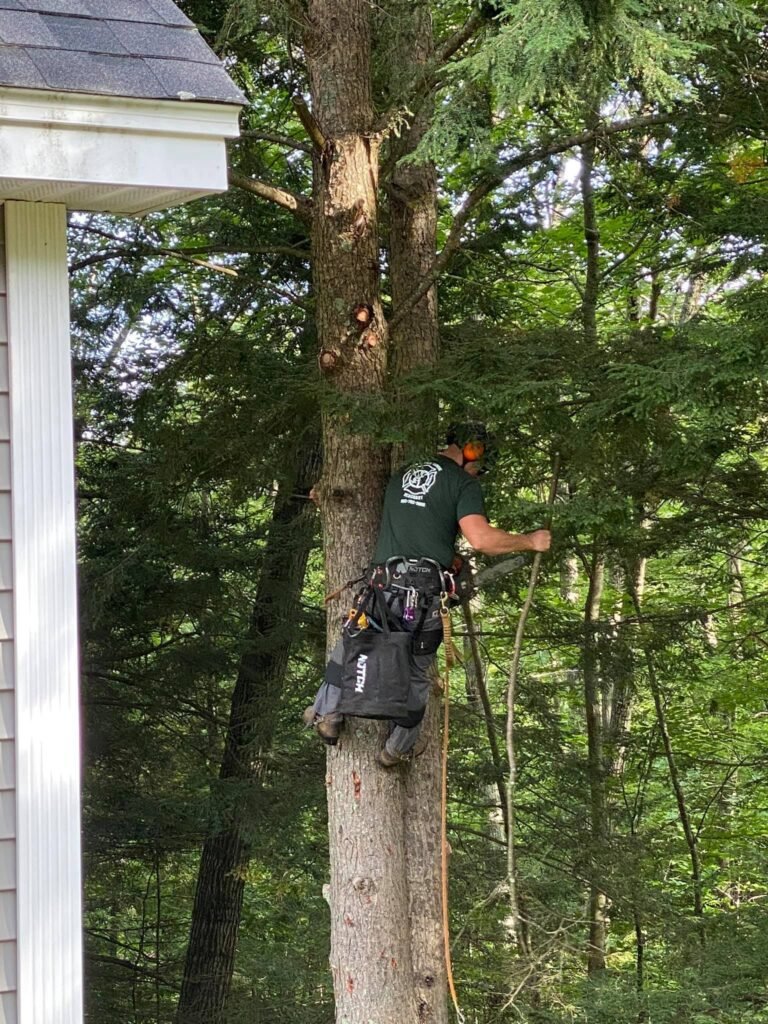
The Science Behind Fall Tree Removal
There’s actually some fascinating biology at work here. When autumn arrives, trees naturally begin their dormant phase. Think of it like they’re going to sleep for the winter. This biological shift makes fall the perfect window for tree cutting services.
During dormancy, trees slow down their metabolic processes dramatically. Sap flow decreases, which means less “bleeding” when cuts are made. This reduces stress on the tree if you’re doing selective removal around other healthy trees. It’s like performing surgery when the patient is already under anesthesia.
But here’s where it gets really interesting. Research from the International Society of Arboriculture shows that tree removal during dormant seasons results in 40% less impact on surrounding root systems. Why? Because neighboring trees aren’t actively growing and competing for resources. They’re conserving energy, which means they can better handle the minor disruption of losing a nearby tree.
Here’s what happens when you remove trees in fall versus other seasons:
Fall removal benefits:
- Minimal sap loss and tree stress
- Clearer visibility of structural issues
- Reduced impact on wildlife (most birds have finished nesting)
- Ground conditions are typically drier and more stable
Spring/summer removal drawbacks:
- Active growing season means maximum stress
- Dense foliage hides potential hazards
- Wet soil conditions can damage lawns
- Peak nesting season for wildlife